
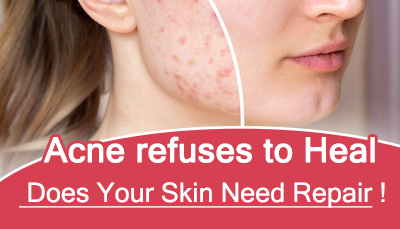
A small pimple on the face can sometimes disturb a person’s entire confidence.
For a teenager, acne can mean avoiding school photos. For a college student, it can mean hiding behind filters. For a bride-to-be, it can create anxiety before the most important days of life. For a working professional, it can affect confidence in meetings, interviews, and social situations.
But the real pain begins when acne refuses to heal.
You try one face wash. Then another cream. Then a salon facial. Then a “doctor-recommended” product from social media. For a few days the pimples look better, but soon they return—with more redness, more dark marks, more sensitivity, and sometimes early scars.
At this stage, the question is no longer:
“Which cream should I apply?”
The better question is:
“Is my skin asking for medical repair?”
Acne is often misunderstood as “oily skin,” “dirty skin,” or “teenage pimples.” In reality, acne is a medical skin condition involving blocked pores, excess oil production, inflammation, acne-related bacteria, hormonal triggers, stress, unsuitable cosmetics, and sometimes underlying conditions like PCOS.
This is why the same cream cannot work for every patient.
A 16-year-old boy with oily skin, a 24-year-old woman with hormonal acne, a 35-year-old professional with adult acne, and a patient with painful cystic acne all need different treatment planning.
The American Academy of Dermatology’s acne guideline recommends treatment according to the patient’s acne type, severity, and risk of scarring. Recommended medical options include benzoyl peroxide, topical retinoids, topical antibiotics, oral antibiotics, hormonal therapies in selected patients, and isotretinoin in severe or scarring acne.
Many patients do not suffer because they ignored acne. They suffer because they treated it incorrectly for too long. The most common mistakes include using steroid-mixed creams, changing products every few days, using harsh scrubs, squeezing pimples, applying fairness creams, and relying only on salon treatments or home remedies. Steroid-mixed creams may temporarily reduce redness, but they can make the skin thin, sensitive, red, acne-prone, and more difficult to treat. Squeezing pimples can push inflammation deeper and increase the risk of permanent pits and scars. This is why acne treatment should not focus only on “drying pimples.” The bigger goal is to control inflammation early and prevent long-term skin damage.
Many people delay dermatologist consultation because they think acne is temporary. But acne can leave two types of long-lasting damage.
The first is acne marks—dark brown spots, red marks, or pigmentation after pimples heal. These may improve with proper treatment, but they can take months.
The second is acne scars—pits, depressions, uneven texture, and permanent changes in the skin surface. Once scars form, treatment becomes longer, costlier, and more procedure-dependent.
That is why early acne control is not vanity. It is scar prevention.
A painful pimple today can become a permanent scar tomorrow if inflammation is ignored.
Your skin may need a repair-focused approach if you have:
In such patients, the treatment goal should be broader than oil control. The aim should be to calm inflammation, restore the skin barrier, reduce microbial imbalance where relevant, support healing, prevent marks, and reduce the risk of scars. This is where dermatologist-guided skin repair becomes important.
Core Therapy is a repair-focused supportive approach that may be considered in selected patients as part of a dermatologist-supervised acne and skin-healing plan.
Its purpose is not to make the skin artificially fair. Its purpose is to support healthier, calmer, better-healing skin.
In suitable cases, Core Therapy may be discussed as an adjunct to standard acne treatment, especially where the skin is inflamed, stressed, repeatedly infected, slow to heal, or prone to marks and scars.
However, this must be understood clearly:
Core Therapy is not a magic acne cure.
It is not an overnight beauty treatment.
It is not a replacement for dermatologist-prescribed acne medicines.
It is a supportive repair-based option that may be useful in selected patients after proper skin evaluation.
Current dermatology literature describes core-therapy-related approaches as promising for some skin conditions, especially wound-healing-related conditions, but also notes that study quality varies and stronger evidence is still needed.
For acne, evidence around Core Therapy is still emerging. A published 2025 case report described improvement in severe acne using topical core-therapy-related treatment, but a single case report cannot be treated as proof for all patients. It should be viewed as promising but early evidence.
The stronger evidence area is wound healing. Studies and reviews have discussed a supportive role of core-therapy-related treatment in chronic wounds and diabetic foot ulcers, where healing, infection control, and tissue repair are major concerns.
For acne patients, this means one important thing: the scientific direction is interesting, but responsible use matters. Core Therapy should be used only under proper medical supervision and only when it fits the patient’s skin condition.
At Skinobody, Arogya Hospital, Jassian Road, Ludhiana, acne is not treated with a “one cream for everyone” approach. A proper acne consultation looks at:
Based on this evaluation, a personalized plan may include medical acne treatment, skincare correction, scar-prevention strategy, pigmentation control, lifestyle guidance, and selected repair-focused adjuncts such as Core Therapy where appropriate. The aim is not just to dry pimples. The aim is to help the skin become calmer, healthier, less inflamed, and better healed.
Adult acne, especially in women, deserves special attention.
If acne appears after the age of 25, worsens around periods, is associated with irregular cycles, facial hair growth, weight gain, or hair fall, hormonal factors may be involved.
In such cases, repeated creams may only give partial relief. The root trigger may need proper evaluation.
This is why adult acne should not be dismissed as a cosmetic issue. It may be the skin’s way of revealing an internal imbalance.
Healthy skin does not mean white skin.
Healthy skin does not mean filter-perfect skin.
Healthy skin does not mean using ten products every night.
Healthy skin means skin that is calm, balanced, less inflamed, less irritated, and healing properly.
So if your acne keeps coming back, do not blame yourself. Do not keep changing creams randomly. Do not trust every advertisement, influencer routine, or “instant glow” promise.
Your skin may be telling you something very important:
“Don’t hide me. Understand me. Don’t suppress me. Repair me.”
You should consult a dermatologist if your acne is not improving after 6–8 weeks of basic care, if pimples are painful or pus-filled, if acne marks are increasing, if pits or scars have started appearing, if your skin has become red and sensitive after creams, or if acne is affecting your confidence. Early treatment can prevent long-term skin damage. Acne is easier to control before scars appear. Once scars form, treatment becomes more complex.
Resistant acne is not a sign that your skin is hopeless. It is a sign that your skin needs the right diagnosis, the right timing, and the right repair-focused treatment plan.
At Skinobody, Arogya Hospital, Jassian Road, Ludhiana, patients with repeated acne, acne marks, sensitive skin, and early scars can get dermatologist-guided evaluation and personalized treatment planning.
Because your skin does not need another random cream.
It needs to be understood.
It needs to be protected.
It needs to be repaired.
1. Why is my acne not healing despite using creams?
Acne may not heal if the underlying trigger is not addressed. Hormonal acne, cystic acne, wrong cosmetics, steroid cream misuse, inflammation, and acne-related bacteria may all require different treatment strategies.
2. Is Core Therapy useful for acne?
Core Therapy may be considered as a supportive skin-repair approach in selected acne patients under dermatologist supervision. It is not a guaranteed cure and should not replace standard acne medicines.
3. Can acne scars be prevented?
Yes, many acne scars can be prevented if inflammation is controlled early. Painful, deep, recurrent, or pus-filled acne should be treated before permanent pits develop.
4. When should I see a dermatologist for acne?
You should see a dermatologist if acne persists beyond 6–8 weeks, causes pain, leaves marks, forms scars, or worsens after using multiple creams.
5. Which is the best acne treatment in Ludhiana?
The best acne treatment depends on the type and severity of acne. At Skinobody, Arogya Hospital, Ludhiana, treatment is planned after evaluating skin type, acne grade, hormonal factors, previous treatment, and scarring risk.